
Radically Responsible. Ocean-Approved.
The Scallop Design Co. Sourcing Ethos
Science, Stewardship, and Magic. As a coral reef scientist, our founder Dr. Erin Winslow knows firsthand how delicate marine ecosystems are. Many coastal brands celebrate the ocean while unintentionally sourcing materials without knowing much about where they came from. We believe beautiful things should come with better questions.
At Scallop Design Co., true "coastal whimsy" means creating beautiful things without taking unnecessarily from the wild. From the jewelry you wear to the suncatchers in your window, here is what we currently know about the earth and sea elements that make up our studio, and we are always seeking to learn more to minimize our footprint.
Abalone (Pāua)
The Problem: Abalone is heavily sought after for its stunning iridescence, but global wild populations have plummeted over 70% since the 1970s due to unsustainable harvesting. Sourcing wild abalone without appropriate management can put additional pressure on already vulnerable populations and disregard the cultural relationships communities have maintained with these species for generations. It can also be illegal.
Our Alchemy: We refuse to contribute to unsustainable wild depletion. Our abalone (Pāua) is sourced directly from New Zealand through Luméa, which works with suppliers connected to managed fisheries and shell-gathering communities. Luméa partners with strictly managed fisheries that enforce harvest limits and run vital repopulation programs. Gathered largely by local freedivers drawing on indigenous knowledge, our abalone is rooted in cultural and ecological respect.
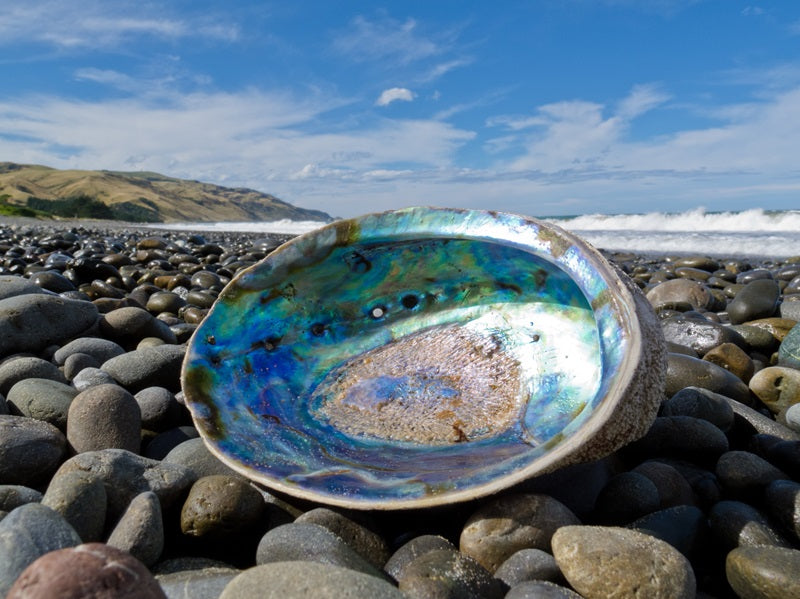
An abalone shell on a New Zealand beach. Photo credit: Ocean Shell Studios
Pearls
The Problem: Pearl farming is aquaculture, not wild harvesting, but “farmed” does not automatically mean sustainable. Environmental impacts can vary depending on farming practices, stocking density, water management, and local ecosystem conditions. The pearl industry can also be surprisingly opaque about where and how materials are produced, making it difficult to know the full story behind a pearl.
Our Alchemy: Pearls are one of the defining materials in Scallop Design Co., and we believe they should be sourced with the same care we bring to everything else. Whenever possible, we prioritize vintage and old-stock pearls that are already in circulation, including both freshwater and marine pearls. Giving existing materials a second life allows us to incorporate beautiful pieces of pearl history without creating demand for newly harvested material.

A small Japanese pearl farm. Photo credit: New York Times
When we need specific shapes, sizes, or quantities that we cannot find through vintage or existing stock, we currently source new pearls exclusively from cultured freshwater pearl farms. We work with small, independent pearl businesses, including family-run suppliers on Etsy, and prioritize understanding where our materials come from rather than treating “cultured” as a sustainability guarantee.
We believe sourcing responsibly means being honest about what we know, and what we don't. While cultured pearls avoid the mineral extraction associated with mined gemstones, pearl farming can still have environmental impacts depending on farming and water-management practices. We therefore don't consider “cultured” to automatically mean “sustainable.”
Instead, we focus on keeping beautiful materials in circulation when we can, supporting small suppliers, and continually learning more about the origins and practices behind the materials we use.
Our Impact
Closing the Loop: Restoring Reefs
Our commitment to the ocean doesn't end in the studio. Through our partnership with Coral Vita, a portion of our work directly supports the restoration of Caribbean coral reefs. When you adopt a coral through the Coral Vita website, your purchase helps support the cultivation and restoration of corals that are returned to degraded reef ecosystems.
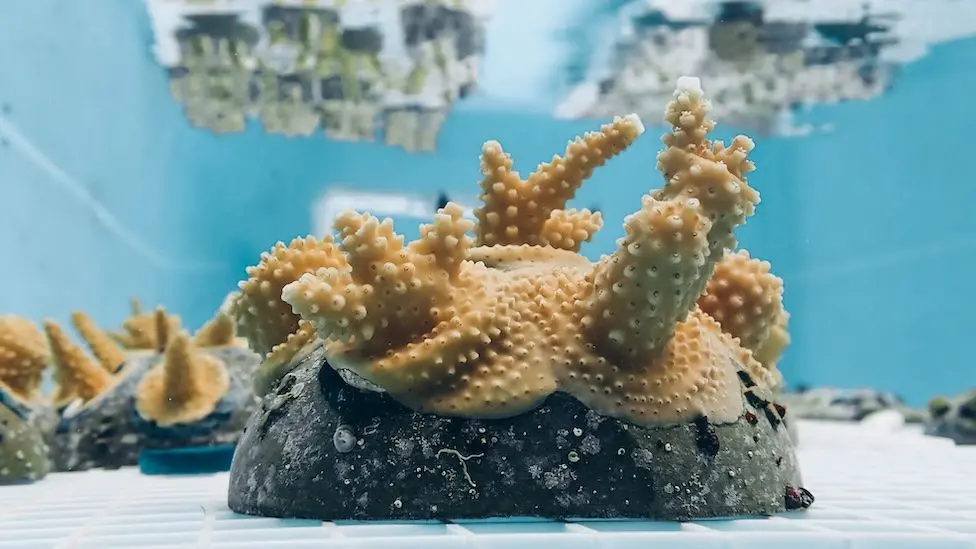
An Acropora cervicornis (staghorn coral) in a land-based nursery. Photo credit: Coral Vita
It's one small way we can help give back to the ecosystems that inspire our work.
Transparency Is a Practice, Not a Label
We believe the biggest problem with "sustainable" sourcing is often what we don't know.
Supply chains for natural materials can be complex, and information about origin, harvesting, farming, labor, and environmental practices isn't always easy to find. We would rather be honest about what we know, what we don't know yet, and what we're working to improve than make sweeping claims about something we can't back up with fact.
Our sourcing practices will continue to evolve as we learn more, find better suppliers, and grow our relationships with the people and communities behind our materials.
Beautiful pieces should come with a story we feel good about telling ♡
Shop our radically responsible collection